
AI has made design faster, easier, and more accessible than ever before. With a few clicks and the right prompt, anyone can generate a polished image, a logo concept, or what appears to be a complete brand visual system in seconds. For many businesses, especially small ones, that ability feels exciting and kinda cool, right? Design suddenly feels easy without barriers of time, cost, or technical skill.
Spend enough time looking at this content, though, and the patterns becomes hard to ignore. The same lighting treatments show up again and again. The same gradients, facial expressions, and hyper-smooth finishes dominate feeds and websites. Everything looks technically refined, yet strangely hollow. What once felt novel quickly turns into visual noise.
The Real Issue Is Not AI, It Is Sameness
The problem is not that AI is being used in graphic design. The problem is how often it is used without much thought. AI design tools are trained on massive datasets made up of existing imagery, popular styles, and current trends. That makes them very good at recreating what already performs well visually.
It also makes them very good at reinforcing sameness.
When thousands of brands rely on the same tools, trained on the same data, and guided by similar prompts, the output starts to blur together. The work looks competent, clean, and impressive at first glance, but it is also interchangeable. This does not always result in bad design, but it almost always results in forgettable design, which quietly erodes brand recognition and trust over time.
I find myself rolling my eyes more than I would like while scrolling social media lately. Not because small businesses are using AI, but because the results are so predictable. I will see one post with a very specific gradient, color scheme, and font treatment, and then see the same thing again a few posts later from a competitor. When visuals become interchangeable, brands do too.
I used AI to generate the images below, using a standard prompt in two separate chats to: Create a modern social media graphic promoting an upcoming event for Business Name. Save the Date, Spring Open House, Sunday, March 1, 2:00–4:00 PM.
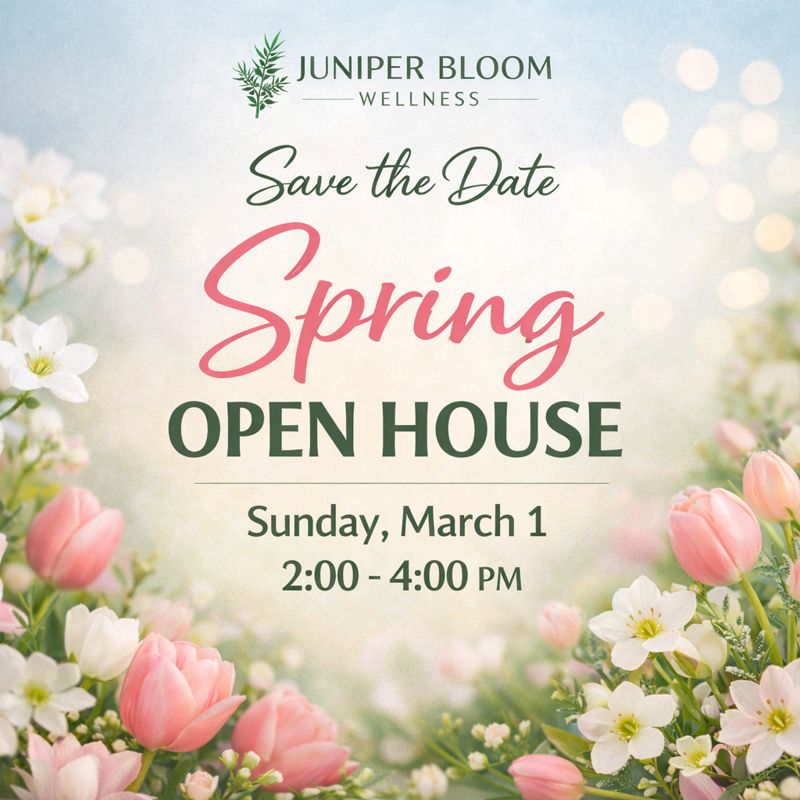
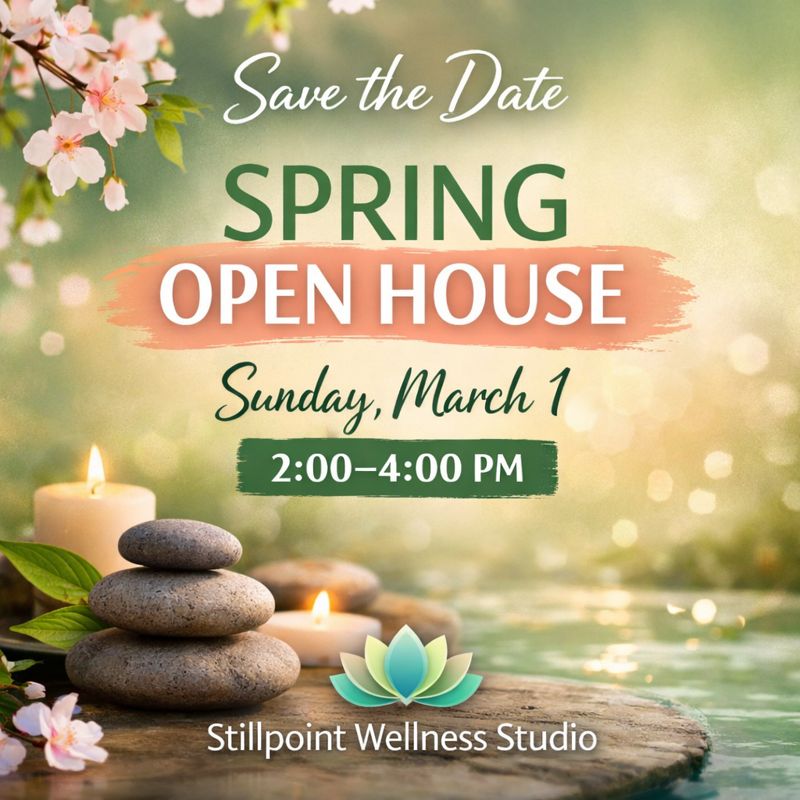
For an event like this, where the goal is simply to share information quickly, this kind of visual sameness is not a dealbreaker. A social post for a one-off event does not need to carry the full weight of your brand identity. In this context, AI can be an acceptable shortcut… if you take the time to write a thoughtful prompt and make sure the output actually aligns with your brand.
Where it breaks down is when the same approach is applied to branding your business. Your brand visuals are not disposable. They shape how people recognize you, trust you, and remember you over time. Using generic AI generated design for those assets strips away the very thing that makes your business distinct.
This is not a perfect representation of what I see scrolling day to day, but it is a solid example of the pattern. The same font pairings, the same soft blurring, and the same overall composition show up again and again across different businesses using AI without clear direction.
Why AI Design Feels So Impressive at First
The appeal of AI-driven design makes complete sense. It allows people to create something from their own ideas without needing years of training or a professional background. For small businesses, this can feel like a breakthrough moment where creative control is finally in their hands.
The challenge is that novelty has a short shelf life. Audiences adapt quickly to new visual patterns, especially when those patterns start appearing everywhere at once. What feels fresh and exciting today becomes familiar much faster than most brands expect. As more businesses lean on the same visual shortcuts, the impact fades and attention follows. Rather than standing out from the crowd, they blend in.
Design Is About Problem Solving, Not Image Generation
This is where the real conversation needs to shift, especially for those still riding the high of clicking a button and watching an image appear. Design is not about producing images. It is about solving problems.
Good design considers who the audience is, what they need to understand quickly, and how a brand should be perceived in a crowded marketplace. It creates clarity, hierarchy, and distinction. AI can generate visuals, but it cannot define strategy, interpret nuance, or make informed decisions about positioning.
And this part matters more than people realize. AI also cannot reliably produce production-ready assets. Vector-based logos, scalable brand systems, and files built for print, signage, and long-term use still require human oversight and expertise. Without those considerations, visuals may look great in isolation but fall apart when it comes time to actually use them.
Where AI Fits Into a Thoughtful Design Process
To be clear, I am not against AI in design when it is used intentionally. It can be genuinely helpful for early concept exploration, inspiration, mood direction, ideation support, and streamlining repetitive tasks. I’ve personally used AI in this manner. In these roles, AI works as a tool, not a decision-maker.
That distinction matters. Tools are meant to support thinking, not replace it. When AI is guided by strategy and professional judgment, it can improve efficiency without flattening brand identity.
Use AI where speed and flexibility make sense, like social media. But even then, it needs guardrails. That means clear prompts, defined brand standards, and an understanding of what should and should not change. Without those, AI does not save time, it creates inconsistency… and more than a little eye rolling from those who know better.
Invest in professional design where identity and trust matter most. Your logo, website, brand system, and core marketing assets are not the place to experiment or cut corners. Those pieces set the visual language for everything else. When they are done right, AI becomes easier to use well because it has something solid to follow.
That balance is what keeps a brand from disappearing into the sea of sameness. AI can support your marketing, but it should never be in charge of it.
If you are looking for custom design that helps your business stand out from the sea of sameness, Inspiration Media can help. My work is grounded in strategy, clarity, and intention, not shortcuts or trends. Give me a call to start a conversation about design that reflects who you are and why you are different.