
Social media templates are everywhere. They promise quick content, clean layouts, and a faster way to stay consistent online. For some businesses, that is a real benefit. For others, templates can weaken the way customers interact with their posts.
As a small business marketing studio here in Vermont, I see both sides every day. My opinion is simple. Templates are a tool, not a strategy, and they only work well for certain industries. In the right situations, they keep your content clean and efficient. In the wrong situations, they create a pattern your audience learns to skip right over.
Below is a breakdown of when templates help, when they hurt, and how to choose the right approach for your business.
The Appeal of Templates
Templates exploded in popularity because they solve real problems.
They make content creation faster.
They help people post more consistently.
They take away the pressure of starting from scratch.
For busy small business owners trying to keep up with social media, templates feel like a simple win.

The Pros of Using Templates
Templates do offer real benefits, especially in industries with repetitive or high-volume content.
- Templates allow businesses to get content out the door quickly without designing each post by hand.
- When your content falls into predictable categories, templates help keep everything uniform and easy to understand.
- Some industries truly benefit from having a structured format that stays the same across posts. A few examples include:
- Real estate listings
- Restaurant specials
- Gym and class schedules
- Quick service reminders
In these cases, the audience expects the same format, so a template simplifies the experience for both the business and the viewer.
The Cons of Relying on Templates
The real issue is not that your brand looks like everyone else. The issue is that your posts start looking identical to your own previous posts.
Audience Scrolls Because They Think They Have Already Seen It
This is the biggest reason templates can hurt engagement. When every post follows the same layout and structure, people mentally register it as more of the same. They scroll right past it because it feels familiar, even if the content is new.
This is a pattern I see often. Businesses think they are being consistent, but from the viewer’s perspective, the posts blend together. To put it bluntly, they are boring. Repetition becomes noise.
Reduced Engagement Over Time
When the visual structure never changes, your audience stops pausing long enough to absorb the message. Engagement drops, not because the content is bad, but because nothing signals the viewer to slow down.
Limited Creative Flexibility
Templates lock you into a grid that does not always match the story you want to tell. Some messages need more warmth, emotion, or space than a template allows.
Not Ideal for Narrative or Lifestyle Brands
If your content depends on emotion, personality, or visual storytelling, templates rarely carry that weight. They flatten moments that should feel dynamic or human.
When Templates Are the Right Choice
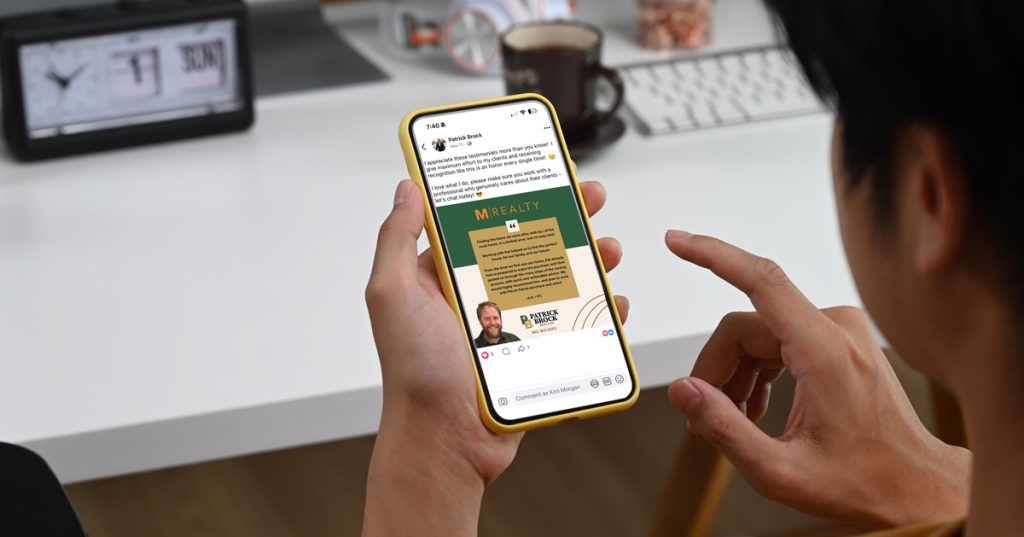
There are absolutely industries where templates make sense. One example is Patrick Brock, a Vermont realtor I work with. He posts listings that need to be clear, easy to scan, and fast to produce. In this case, a template helps the viewer get the information they want without distraction.
The content is repetitive by nature, and the template reinforces that structure in a good way.
When Custom Content Works Better
If your brand relies on:
- Emotion
- Lifestyle imagery
- Depth of story
- Seasonal or campaign shifts
- A sense of place or craftsmanship
A template might actually limit how your audience experiences your message. Custom design creates variation. Variation creates curiosity. Curiosity leads to engagement.
Blending Templates with Custom Content
You do not have to commit to one method. Many businesses use templates for predictable updates, such as testimonials or welcoming a new employee, and custom content for everything else.
A simple approach is:
- Templates for announcements and weekly information
- Custom graphics or photos for product highlights, storytelling, or seasonal post
- Occasional shifts in layout to help the audience pause
This mix keeps your feed consistent without becoming repetitive.
Templates can absolutely be effective, but they are not right for every business or every type of content. The real question is whether they help your audience notice your posts or scroll past them.
Tools matter, but strategy matters more.
If you want help deciding whether templates make sense for your business or you want a custom branded set that keeps your feed fresh, reach out. I would love to help you create a system that works for how your audience actually consumes content.